

גולדי
49 • Ashdod
Browse Profiles 40+



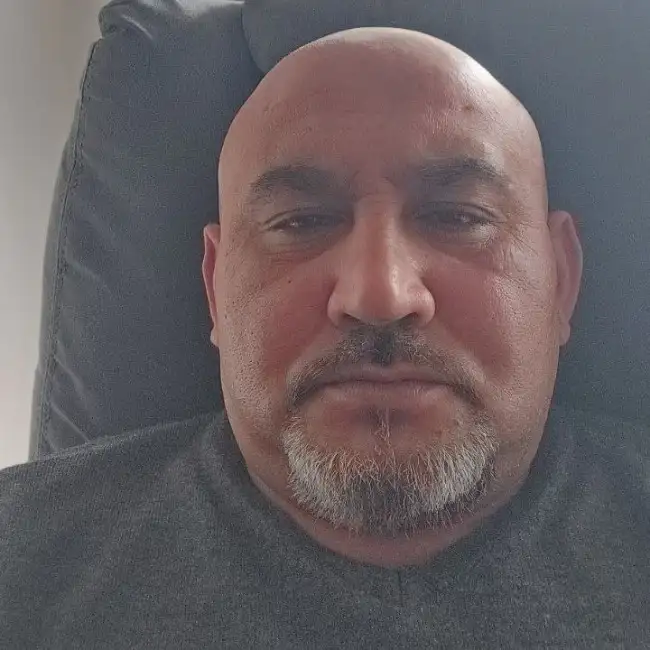


This page shows DateLy profiles from the married marital-status category who are 40 or older. That gives you a narrower age range to browse, but it does not explain each person's circumstances or intentions. Those details belong in the profile and, when there is mutual interest, in the conversation.
A profile category is only a starting point. Two people with the same age range and marital status may have very different schedules, expectations and reasons for meeting someone. Reading what a person has chosen to share is more useful than guessing from the label alone.
Many adults already have established work, family, social and personal routines. That does not make meeting someone new complicated by definition, but it can make practical questions worth noticing. How far apart are you? When are you usually free? Do you prefer occasional messages or more regular contact? Is meeting during the week realistic, or are weekends easier?
There is no need to discuss all of this in the first message. If the conversation feels easy and both people want to continue, practical details can help show whether meeting is realistic.
Marital status is relevant information for another person deciding whether to continue a conversation. Being clear about it does not mean explaining your family situation in public. Your profile can be accurate without naming a spouse, describing what happens at home or sharing details about children and relatives.
Privacy and accuracy are not opposites. You can give someone enough context to make an informed choice while keeping third-party information out of your profile.
A useful profile says more than age and marital status. Recent photos, a few specific interests, your general area and a short description of what your everyday life looks like give another person something real to respond to.
DateLy lets you browse profiles and use available age and location information to narrow the field. This page already starts with the married category at age 40+, while the broader married-category page covers the category without this age split. If you are looking for the younger segment, the under-40 page is available separately.
Age and distance can tell you whether someone falls within a practical range. They cannot tell you whether conversation will feel natural, whether your expectations are similar or whether you will want to meet. For that, the profile and the exchange between two people matter more.
A first message does not have to begin with questions about someone's private circumstances. It can start with something they chose to share: a place in a photo, a hobby, music, a trip, food or a sentence in the profile. That gives the other person an easy way to answer without turning the first exchange into an interview.
If the conversation continues, there is room to discuss availability, boundaries and expectations. Those subjects are more useful once there is actually a reason to keep talking.
DateLy also supports voice messages. Some people like hearing tone and manner of speaking after a text conversation has started; others prefer to keep writing. There is no need to move to voice immediately. Use it when it feels comfortable for both sides.
You can add a short profile video if you want to show more than a still photo. It can give a sense of voice, expression and the way you speak. It is a recorded introduction shown on the profile, not live video chat and not a video call.
Meeting someone new does not automatically mean reorganizing every part of your life. Some people value their own routines, home, friendships, work and family time and want any new connection to fit alongside them. Others may be open to something that eventually takes up more space. Neither approach can be assumed from age or marital status.
What matters is whether both people understand what is realistic. A connection that works on paper can still be difficult if travel, timing or communication expectations do not fit either person's week.
No online service can guarantee that information you publish will never be seen or shared by someone else. The practical approach is to keep sensitive information out of early conversations and profiles. An exact home address, exact workplace, financial information, passwords, verification codes and private documents can wait. Identifying details about spouses, children or other family members should also stay private.
For broader practical guidance, see DateLy's Online Dating Safety page and Privacy Policy.
If both people want to meet, choose a public place that is convenient for both sides. Coffee, a walk or another straightforward plan is enough for a first meeting. There is no need to decide what the connection means before you know whether conversation feels as comfortable in person as it did online.
DateLy provides the profile, browsing tools and ways to communicate. It does not decide what someone's circumstances mean or what a connection should become. Start with the profile in front of you, ask normal questions and let each person explain their own expectations rather than filling in the gaps with assumptions.
This page shows DateLy profiles from the married marital-status category who are age 40 or older.
It gives people a more focused starting point by age. You can still read each profile and use location and other available details to decide who may be relevant to you.
No. Age and marital status do not tell you what each person wants. Read the profile and discuss expectations directly if the conversation develops.
Yes. The profiles shown on this page are selected from the married category and are age 40 or above.
Yes. Voice messages are available as another way to communicate alongside text when both people are comfortable using them.
It is a short recorded introduction that appears on a profile. It is not a live video call or video chat.
Share personal information gradually. There is no need to provide an exact home address, financial information, documents or identifying details about family members early in a conversation.